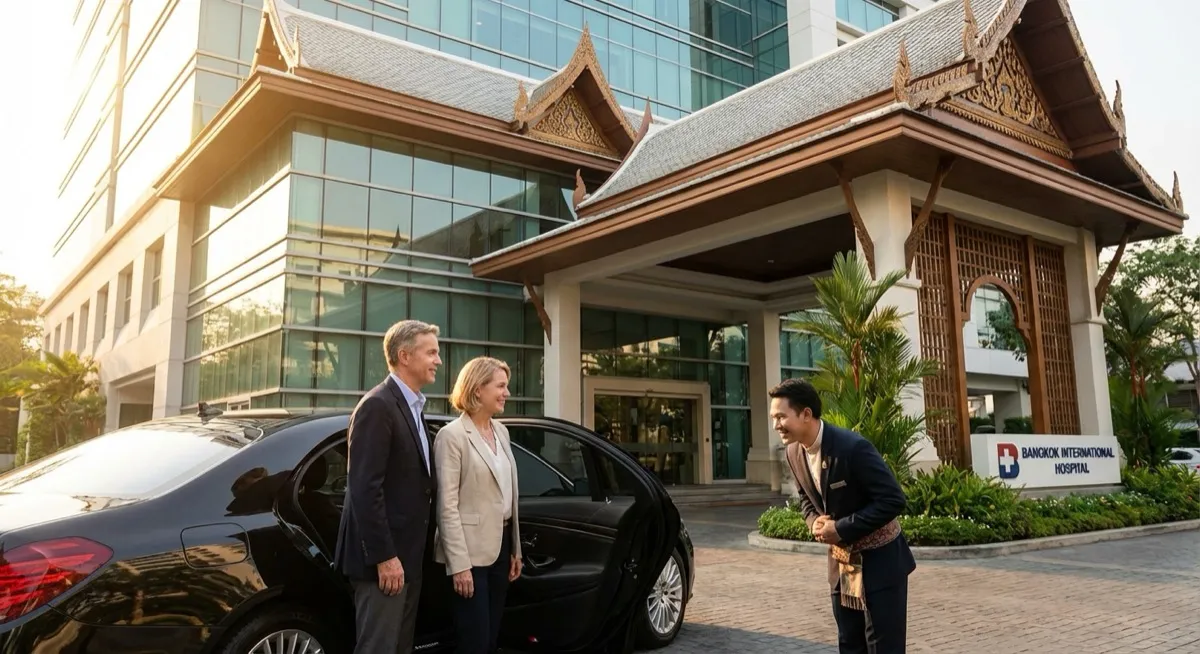
Every year, an increasing number of American patients are looking beyond US borders for cosmetic surgery, and Thailand has emerged as the clear frontrunner. The combination of dramatically lower costs, world-class medical infrastructure, and an unparalleled patient experience has made cosmetic surgery in Thailand for Americans one of the fastest-growing segments of the global medical tourism industry. Whether you are considering a facelift, rhinoplasty, breast augmentation, or a full body contouring package, Thailand offers a level of quality and value that is difficult to match anywhere in the United States.
For American patients accustomed to the high costs of elective cosmetic procedures, Thailand represents a genuine opportunity to achieve outstanding results without the financial strain. The savings are real, the surgeons are world-class, and the experience of recovering in a tropical paradise adds a dimension to the journey that simply does not exist at home. This guide covers everything US patients need to know before booking their trip.
Why Americans Choose Thailand for Cosmetic Surgery
The primary driver for American patients traveling to Thailand for cosmetic surgery is cost savings on procedures that are almost never covered by US health insurance. Elective cosmetic procedures like breast augmentation, rhinoplasty, liposuction, and facelifts are classified as non-essential by American insurers, meaning patients pay entirely out of pocket. In the United States, a single procedure can easily cost $8,000 to $15,000 or more when you factor in surgeon fees, anesthesia, facility costs, and follow-up visits. In Thailand, the same procedures are performed at JCI-accredited hospitals for 50 to 70 percent less.
Beyond cost, American patients are drawn to Thailand for the quality of care. Thailand has more JCI-accredited hospitals than any country in Southeast Asia, and its top surgeons have trained at leading institutions in the US, UK, and Australia. The private hospital experience in Bangkok often surpasses what patients encounter at American surgical centers, with private rooms, dedicated nursing staff, and concierge-level service as standard offerings.
There is also the recovery experience. Rather than returning to work and daily responsibilities immediately after surgery, American patients in Thailand can extend their stay to heal in luxury hotels, beachside resorts, or wellness retreats. This combination of excellent surgery and restorative recovery is what keeps thousands of US patients returning to Thailand year after year.
Understanding Thai Medical Standards Compared to the US
One of the most common concerns American patients have is whether Thai medical standards are comparable to what they would find at home. The short answer is yes. Thailand's medical regulatory framework is robust and in many ways mirrors the US system. The Thai Food and Drug Administration operates as the regulatory equivalent of the US FDA, overseeing the approval and safety of medical devices, implants, pharmaceuticals, and surgical equipment used in Thai hospitals. The same implant brands used in the United States, such as Allergan, Mentor, and Motiva, are approved and widely used in Thailand.
Thai plastic surgeons seeking board certification must complete a rigorous six-year training program after medical school, including specialized residencies in plastic and reconstructive surgery. Many of Thailand's top cosmetic surgeons hold additional fellowships from American, European, or Australian institutions. Hospitals like Bumrungrad International, Bangkok Hospital, and Samitivej are JCI-accredited, meaning they meet the same international quality and patient safety standards as top US hospitals.
American patients should look for surgeons who are certified by the Royal College of Surgeons of Thailand and who operate at JCI-accredited facilities. These credentials provide a reliable baseline for quality and safety that Americans can feel confident about.
Cost Savings for American Patients
The cost savings for American patients traveling to Thailand for cosmetic surgery are substantial. A rhinoplasty that costs $8,000 to $12,000 in the US can be performed in Thailand for $2,500 to $5,500. Breast augmentation runs $6,000 to $12,000 in America but costs $3,000 to $5,500 in Thailand, including a hospital stay. A full facelift that might set you back $15,000 to $25,000 in a major US city is available in Bangkok for $5,000 to $10,000. Liposuction ranges from $3,500 to $8,000 in the US, compared to $1,500 to $4,000 in Thailand.
These savings mean that even after accounting for round-trip flights from the US (typically $700 to $1,200 for economy class), two to three weeks of hotel accommodation ($50 to $150 per night for quality hotels near hospitals), and daily living expenses, most American patients still save 40 to 60 percent compared to having the same procedure performed domestically. Many patients use the savings to combine multiple procedures or to upgrade their recovery accommodation to a luxury hotel or resort.
It is important to note that these lower costs do not reflect lower quality. They are driven by Thailand's lower cost of living, favorable exchange rates, and the high volume of procedures performed at Thai hospitals, which creates operational efficiencies that benefit patients.
Navigating Insurance as an American Patient
Most American health insurance plans, including major carriers like Blue Cross Blue Shield, UnitedHealthcare, Aetna, and Cigna, do not cover elective cosmetic surgery whether it is performed domestically or abroad. This means the out-of-pocket cost comparison is a true apples-to-apples calculation for the majority of patients. Since you are paying entirely out of pocket regardless of where you have the procedure, the question becomes where you can get the best results for the best value.
Some American patients with international health insurance plans or expatriate coverage may find partial coverage for certain procedures performed at accredited international hospitals. It is worth checking with your insurer before traveling, though this applies to a small minority of patients. For the vast majority of Americans considering cosmetic surgery in Thailand, the financial equation is straightforward: the same procedure, the same implant brands, the same safety standards, at a fraction of the cost.
Travel insurance is a separate and important consideration. American patients should purchase comprehensive travel insurance that includes medical coverage abroad. Several providers offer policies specifically designed for medical tourists, covering complications, extended stays, and emergency evacuation if needed.
Flights and Logistics from the United States
Getting to Thailand from the United States is easier than many patients expect. Multiple carriers offer direct or one-stop flights from major US cities to Bangkok's Suvarnabhumi International Airport. From Los Angeles, direct flights on Thai Airways take approximately 17 hours. From San Francisco, similar nonstop options are available. From New York, most itineraries include one stop in a hub city like Tokyo, Seoul, or Doha, with total travel times of 18 to 22 hours.
Airlines serving this route include Thai Airways, Japan Airlines, Korean Air, Cathay Pacific, Qatar Airways, and Emirates. Economy class fares typically range from $700 to $1,200 round trip, while business class fares run $3,000 to $6,000. For patients planning surgical procedures, business class on the return flight is worth considering for the extra legroom and recline, which can make a significant difference in comfort during the early recovery period.
Most American passport holders can enter Thailand visa-free for stays of up to 60 days, which is more than sufficient for the majority of cosmetic procedures and recovery. No special medical visa is required for stays within this period, making the logistics refreshingly simple for US patients.
Cultural Considerations and Communication
Thailand is one of the most welcoming countries in the world for international visitors, and this warmth extends deeply into the medical sector. English is widely spoken in Thai hospitals and clinics that cater to international patients. Surgeons at major hospitals are fluent in English, and dedicated international patient departments employ staff who communicate comfortably in English and often several other languages.
American patients often remark that the level of personal attention they receive in Thai hospitals far exceeds what they experience at home. Private rooms, attentive nursing care, and unhurried consultations are the norm rather than the exception. Thai culture places a high value on politeness, respect, and making guests feel comfortable, and this cultural foundation creates a medical experience that feels genuinely caring.
Tipping is not expected at hospitals, but small gestures of gratitude are appreciated. Thai cuisine is among the best in the world, and hospitals typically offer both Thai and Western menu options for patients during their stay. The cultural experience of being in Thailand adds a richness to the medical journey that transforms what could be a stressful experience into something memorable and positive.
How BeeLink Helps American Patients
Navigating cosmetic surgery in Thailand as an American patient is significantly easier with the right support on the ground. BeeLink serves as your personal concierge throughout the entire process, from your initial consultation through to post-operative follow-up care after you return to the United States. Our team matches you with board-certified surgeons who specialize in your desired procedure, coordinates all appointments and hospital logistics, arranges airport transfers and accommodation, and provides bilingual support at every appointment.
For American patients, BeeLink eliminates the guesswork and research fatigue that comes with planning a medical trip abroad. Rather than spending weeks reading online reviews and trying to verify credentials across language barriers, you work with a knowledgeable team that has already vetted every surgeon and hospital in our network. We understand the specific concerns and expectations of US patients, and we tailor every aspect of the experience to ensure you feel informed, confident, and well cared for from start to finish.
Your journey begins with a free, no-obligation video consultation where we discuss your goals, answer your questions, and outline a personalized treatment plan with transparent pricing. From there, we handle every detail so you can focus on what matters most: achieving the results you want.