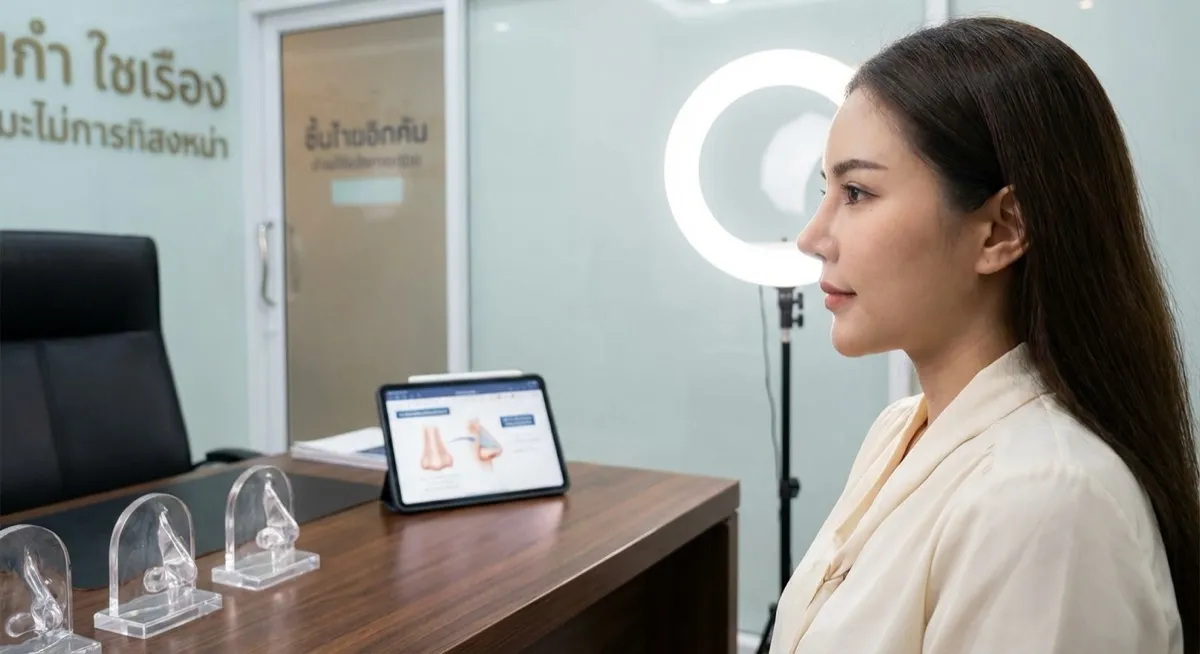
Thailand has earned a global reputation as one of the premier destinations for rhinoplasty, attracting patients from every corner of the world who want to reshape their nose with the help of surgeons who perform this procedure thousands of times each year. Getting a nose job in Thailand combines the precision of highly experienced surgeons, the affordability of Thai medical care, and the comfort of recovering in one of the world's most welcoming countries. Whether you are considering a subtle refinement or a transformative change, Thailand offers a level of rhinoplasty expertise that is genuinely world-class.
Rhinoplasty is consistently one of the most requested cosmetic procedures among international patients visiting Thailand, and Thai surgeons have developed particular expertise in both Western and ethnic rhinoplasty techniques. This guide covers everything international patients need to know about getting a nose job in Thailand, from the types of rhinoplasty available and how to choose the right surgeon to detailed cost breakdowns and a week-by-week recovery timeline.
Why Thailand Is a Top Destination for Rhinoplasty
Thailand's emergence as a global rhinoplasty destination is built on volume, expertise, and results. Thai plastic surgeons perform an extraordinary number of rhinoplasty procedures each year, far exceeding the volume that most Western surgeons encounter in their entire careers. This high volume translates directly into surgical expertise and refined technique. The best rhinoplasty surgeons in Bangkok have each performed thousands of nose jobs, giving them an intuitive understanding of nasal anatomy, structural dynamics, and aesthetic proportions that can only come from deep hands-on experience.
The country's top rhinoplasty surgeons have trained at elite institutions around the world, including programs in the United States, South Korea, and Europe. Many have developed specialized techniques that address the unique structural characteristics of different ethnic nose types, from Southeast Asian and East Asian noses to Middle Eastern, South Asian, and Caucasian noses. This breadth of expertise means that regardless of your ethnicity or your aesthetic goals, there is a Thai surgeon with specific experience in the type of rhinoplasty you need.
Cost is another major factor. A rhinoplasty in Thailand costs $2,500 to $5,500 depending on complexity, compared to $8,000 to $15,000 in the United States and $6,000 to $12,000 in Australia. These savings allow patients to access surgeons with exceptional credentials and experience at a price point that makes the procedure accessible to a much wider range of people.
Types of Rhinoplasty Available in Thailand
Thai surgeons offer the full spectrum of rhinoplasty techniques, and the right approach depends on your anatomy and your goals. Open rhinoplasty involves a small incision on the columella, the strip of tissue between the nostrils, which gives the surgeon direct visibility and access to the nasal structures. This technique is preferred for complex reshaping, significant structural changes, and revision rhinoplasty. Closed rhinoplasty uses incisions entirely inside the nostrils, leaving no visible external scarring. It is suitable for more modest refinements and has a slightly shorter recovery time.
Ethnic rhinoplasty is a particular strength of Thai surgeons, who have extensive experience working with the structural characteristics of Asian, Middle Eastern, South Asian, and African noses. These procedures often involve augmentation using silicone implants or cartilage grafts to build up the bridge, refine the tip, or narrow the nostrils, rather than the reduction-focused approach more common in Caucasian rhinoplasty. Thai surgeons understand the importance of achieving results that enhance the patient's features while respecting their ethnic identity.
Revision rhinoplasty, performed to correct or improve the results of a previous nose job, is also available from experienced Thai surgeons. Revision cases are among the most complex rhinoplasty procedures and require a surgeon with advanced skills and a deep understanding of scar tissue and altered anatomy. Tip refinement, alar base reduction, and septoplasty for functional improvement can be performed as standalone procedures or combined with a full rhinoplasty. Thai surgeons take a comprehensive approach, addressing both aesthetic and functional concerns in a single surgical plan.
Choosing the Right Rhinoplasty Surgeon in Thailand
Selecting the right surgeon is the single most important decision you will make in your rhinoplasty journey, and it deserves careful consideration. Start by confirming that your surgeon is board-certified by the Royal College of Surgeons of Thailand in plastic and reconstructive surgery. This certification confirms that the surgeon has completed the required years of specialty training and meets national standards of competence. Beyond board certification, look for surgeons who demonstrate specific rhinoplasty expertise through their before-and-after portfolio, published work, and patient testimonials.
Ask how many rhinoplasty procedures the surgeon performs per year. The best rhinoplasty surgeons in Thailand perform 200 to 500 or more nose jobs annually, which provides a level of pattern recognition and surgical intuition that comes from sheer repetition. Ask to see before-and-after photos of patients with similar nasal anatomy and similar goals to yours. Pay attention to the naturalness and harmony of the results, not just whether the nose looks different.
A quality consultation should feel unhurried and thorough. The surgeon should examine your nose, discuss your goals in detail, explain which technique they recommend and why, set realistic expectations about what can be achieved, and answer all your questions without impatience. Many Thai surgeons now offer 3D imaging simulations that show you a projection of your likely results before you commit to surgery. This technology is invaluable for aligning expectations between patient and surgeon.
Cost Breakdown for Rhinoplasty in Thailand
Rhinoplasty costs in Thailand range from approximately $2,500 to $5,500 USD depending on the complexity of the procedure and the surgeon's experience level. A basic closed rhinoplasty for tip refinement or minor bridge adjustment falls at the lower end of this range, typically $2,500 to $3,500. An open rhinoplasty involving significant structural reshaping, cartilage grafting, or implant placement costs $3,500 to $5,000. Revision rhinoplasty, which is the most complex and time-intensive, ranges from $4,000 to $5,500.
These prices at accredited Thai hospitals typically include the surgeon's fee, anesthesiologist fee, operating room charges, one to two nights of hospital stay in a private room, post-operative medications, a nasal splint, and follow-up appointments during your stay. This all-inclusive packaging makes it easy to budget for the procedure without worrying about surprise charges. Some surgeons may charge separately for 3D imaging consultations, though many include this in the consultation fee.
By comparison, the same procedures in the United States cost $8,000 to $15,000 (surgeon fee alone, not including facility and anesthesia fees), in Australia $6,000 to $12,000 AUD, and in the United Kingdom 5,000 to 10,000 GBP. The savings are substantial enough that even after adding flights, accommodation, and living expenses for a two-week trip, most patients save 50 to 65 percent compared to having the procedure at home.
What to Expect on Surgery Day
Rhinoplasty in Thailand is performed under general anesthesia at an accredited hospital, and the procedure itself typically takes two to three hours depending on complexity. You will arrive at the hospital on the morning of your surgery, where the nursing team will check you in, run final pre-operative tests, and prepare you for the operating room. Your surgeon will visit you before the procedure to review the surgical plan one final time and mark the treatment areas.
After the surgery, you will wake up in the recovery room with a nasal splint or cast on your nose, internal packing in the nostrils (which is removed within one to two days), and possibly small external sutures on the columella if an open technique was used. You will spend one to two nights in the hospital, where the nursing staff monitors your recovery, manages pain medication, and ensures you are healing properly. Most patients describe the post-operative pain as moderate and well-controlled with prescribed medication.
The day after surgery, your surgeon will visit to check on your progress, and you will receive detailed post-operative instructions covering sleeping position (elevated), activity restrictions, medication schedules, and what to expect as the swelling develops over the following days. You will be discharged from the hospital once the medical team is satisfied with your initial recovery, at which point you transition to your hotel for the remainder of your recuperation.
Recovery Timeline: Week by Week
The first week after rhinoplasty is the most critical recovery period. Swelling and bruising around the eyes and nose are at their peak during days two through four and then gradually begin to subside. The nasal splint or cast is removed at the one-week mark, which is a milestone moment when you get your first glimpse of the new shape. The nose will still be swollen at this point, so the final result is not yet visible, but the general direction of the change will be apparent. Most patients feel comfortable enough to go out for meals and light activities by day five to seven.
During weeks two and three, swelling continues to decrease, bruising fades to a light yellowish tint and then disappears entirely, and the nose begins to look more natural and refined each day. Most patients feel comfortable flying home by day 10 to 14, though this should be confirmed with your surgeon. Strenuous exercise, contact sports, and heavy lifting should be avoided for four to six weeks. Glasses should not be rested on the bridge of the nose for six to eight weeks.
The final results of rhinoplasty develop gradually over 6 to 12 months as residual swelling resolves and the nasal tissues settle into their new position. The tip of the nose, in particular, can take up to a full year to reach its final shape. Thai surgeons advise patients to be patient during this period and to avoid judging their results too early. Follow-up consultations, which can be conducted via video call after you return home, allow your surgeon to monitor your progress and address any concerns during this settling period.
Ethnic Rhinoplasty Expertise in Thailand
One of the standout strengths of Thai rhinoplasty surgeons is their expertise in ethnic rhinoplasty. Because Thailand attracts patients from across Asia, the Middle East, South Asia, Africa, and the West, its surgeons have developed a uniquely diverse skill set. They understand that different ethnic groups have different nasal structural characteristics and different aesthetic ideals, and they tailor their techniques accordingly rather than applying a one-size-fits-all approach.
For patients of Southeast Asian and East Asian descent, rhinoplasty often involves augmentation of the nasal bridge using silicone implants or autologous cartilage grafts, refinement of the nasal tip, and sometimes alar base reduction to narrow the nostrils. Thai surgeons are particularly skilled at creating a natural-looking bridge height that enhances the face without looking artificial or overdone. For Middle Eastern and South Asian patients, the focus is often on refining a prominent bridge, narrowing the tip, and achieving a balanced profile while preserving the ethnic character of the nose.
The best ethnic rhinoplasty results look natural and harmonious with the patient's other facial features. Thai surgeons who specialize in ethnic rhinoplasty take great care to understand the patient's cultural context and aesthetic preferences, ensuring that the result enhances rather than erases their identity. This nuanced approach is a key reason why patients from so many different backgrounds choose Thailand for their rhinoplasty.
How BeeLink Matches You With the Right Rhinoplasty Surgeon
Finding the right rhinoplasty surgeon is the most important step in your journey, and BeeLink is here to make that process as straightforward and informed as possible. Our team maintains relationships with a curated network of board-certified rhinoplasty specialists across Bangkok's top hospitals, and we match each patient with surgeons whose specific expertise aligns with their anatomy, goals, and aesthetic preferences. Whether you are seeking a subtle refinement, a significant structural change, or a complex revision, we connect you with surgeons who have deep experience with your exact type of case.
Your journey with BeeLink begins with a free video consultation where we discuss your goals, review any photos or imaging you have, and outline the next steps. We then arrange consultations with two to three recommended surgeons so you can compare approaches, see before-and-after portfolios, and choose the surgeon you feel most confident with. Once you have made your decision, we handle every logistical detail from scheduling to accommodation to airport transfers.
Throughout your time in Thailand, our team provides on-the-ground support at every appointment, ensuring clear communication between you and your surgeon and advocating for your needs at every stage. After you return home, we coordinate virtual follow-up consultations with your surgeon at key milestones so you can track your results and address any questions during the healing process. Contact us to start your rhinoplasty journey with confidence.