
For patients considering Rhinoplasty, Thailand offers an unmatched combination of clinical excellence, modern facilities, and affordability that is difficult to find anywhere else. The country is recognised for Home to more JCI-accredited hospitals than any other country in Asia, Surgeons frequently trained at top US, UK, and Australian medical schools, and State-of-the-art facilities with the latest medical technology and equipment, ensuring that patients receive treatment that meets — and often exceeds — international standards. Whether you are exploring your options for the first time or have already decided on Rhinoplasty, Thailand deserves a place at the top of your shortlist.
In this guide, we cover everything you need to know about getting Rhinoplasty in Thailand — from the procedure itself and expected costs to recovery tips and how to choose the right surgeon. We also explain how BeeLink, a specialist medical-tourism concierge, simplifies the entire process so you can focus on your results rather than the logistics.
What is Rhinoplasty?
Rhinoplasty reshapes the nose to improve facial harmony, correct breathing issues, or refine proportions — and Thailand's board-certified surgeons deliver world-class results at a fraction of Western prices. It is one of the most sought-after procedures in the Cosmetic Surgery category, and Thailand has become a leading destination for patients who want access to highly trained specialists without the long waiting lists or high price tags common in Western countries. Understanding exactly what the procedure involves is an important first step before making any decisions.
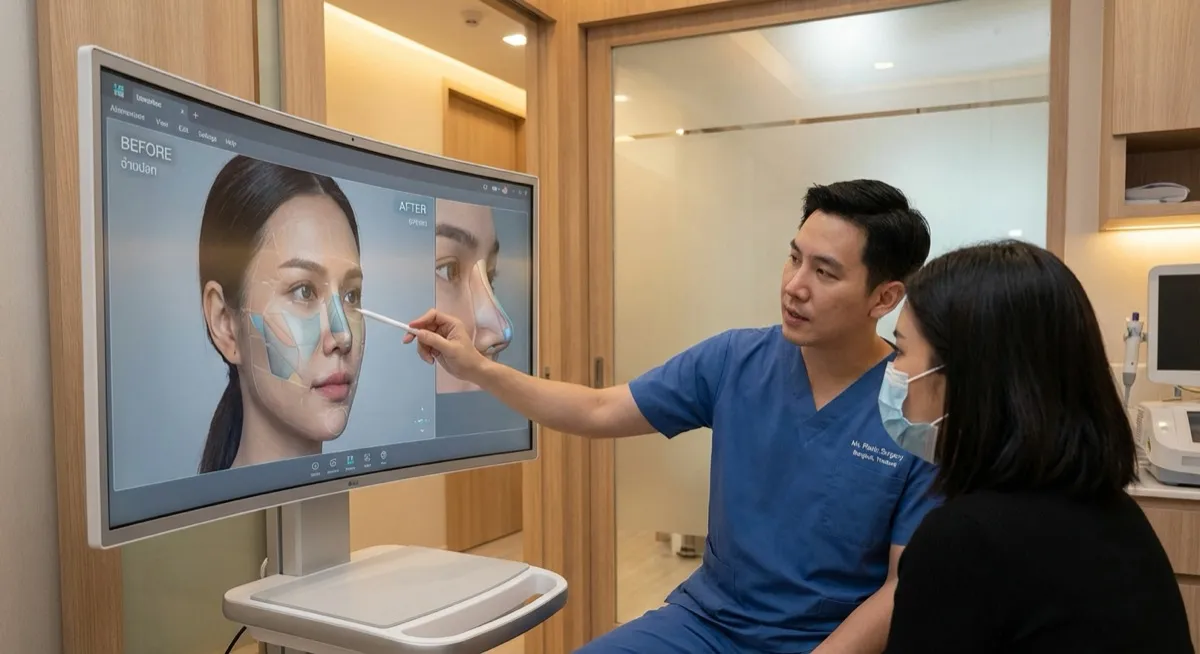
Surgeons in Thailand employ a range of proven techniques, including Open rhinoplasty with columellar incision for complex reshaping, Closed (endonasal) rhinoplasty for subtle refinements with no visible scarring, Ultrasonic piezo rhinoplasty for precise bone reshaping with less bruising, Cartilage grafting using septal, ear, or rib cartilage for structural support, and Revision rhinoplasty for correcting previous surgical outcomes. At a high level, the procedure typically involves: Pre-operative consultation with 3D imaging to discuss goals and create a surgical plan tailored to facial anatomy.; Surgery is performed under general anesthesia and typically takes 2-3 hours, depending on complexity.; The surgeon reshapes bone and cartilage through either open or closed techniques, placing grafts if needed for structural support.. Your surgeon will recommend the approach best suited to your anatomy and goals during a detailed consultation. Because each patient is different, reputable clinics in Thailand take the time to develop an individualised treatment plan before any work begins.
Patients who undergo Rhinoplasty frequently report benefits such as Improved facial balance and symmetry, Correction of breathing difficulties and deviated septum, Enhanced self-confidence and satisfaction with appearance, and Permanent, natural-looking results that age gracefully. Adults with fully developed nasal structure (typically 16+) who are unhappy with the size, shape, or proportion of their nose, or those experiencing breathing difficulties due to structural issues such as a deviated septum. If you are unsure whether you are a suitable candidate, a free initial consultation — which BeeLink can arrange — will give you clarity and confidence.
Why Choose Thailand for Rhinoplasty?
Thailand stands out for Rhinoplasty thanks to Home to more JCI-accredited hospitals than any other country in Asia, Surgeons frequently trained at top US, UK, and Australian medical schools, State-of-the-art facilities with the latest medical technology and equipment, and Comprehensive medical tourism infrastructure with dedicated international patient departments. Medical tourism infrastructure across the country has matured significantly over the past two decades, and the standard of care available today is on par with top-tier facilities in the United States, the United Kingdom, and Australia. Notable hospitals and clinics include Bumrungrad International Hospital (Bangkok), Bangkok Hospital (Bangkok), Samitivej Sukhumvit Hospital (Bangkok), Bangkok Hospital Phuket, and Chiang Mai Ram Hospital (Chiang Mai), all of which maintain rigorous quality-assurance programmes.
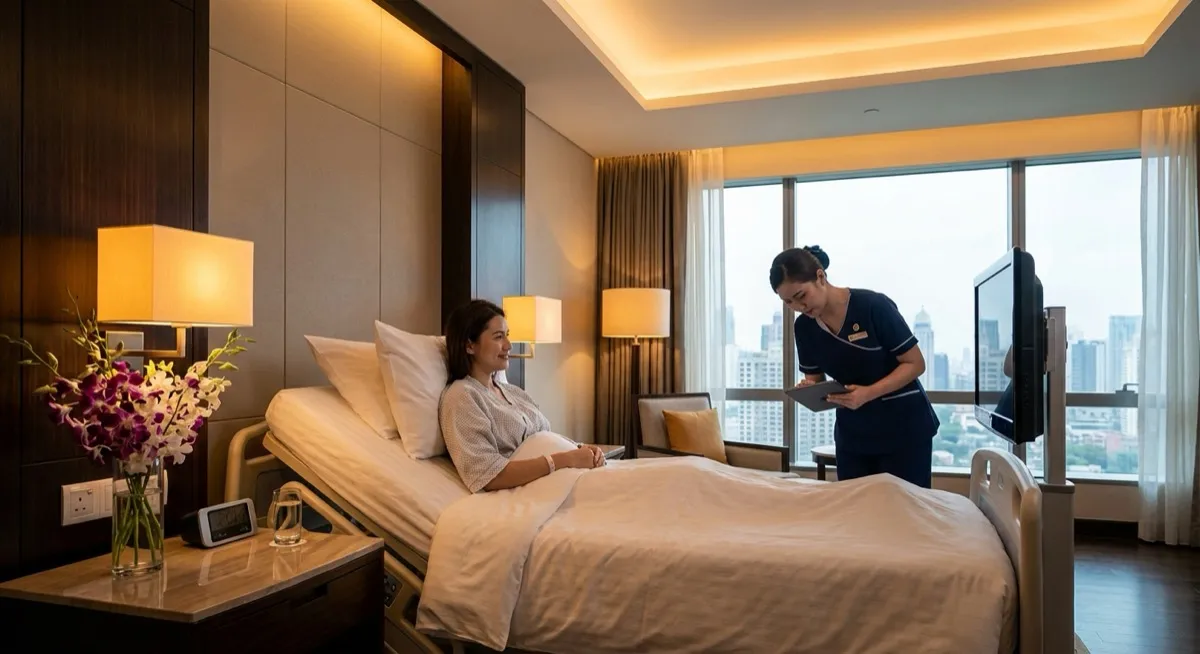
Thailand is especially well suited for Patients seeking world-class medical care at a fraction of Western prices, with the flexibility to choose from cosmopolitan city hospitals, beachside clinics, or culturally rich northern retreats.. Beyond the clinical advantages, patients benefit from a culture of hospitality that is deeply ingrained in Thai society. From the moment you arrive, staff at leading facilities go out of their way to ensure you feel comfortable and well-informed. English-speaking coordinators, private recovery suites, and dedicated international patient departments are standard at the hospitals BeeLink partners with.
Choosing Thailand also means you can combine your treatment with a genuinely restorative travel experience. Thailand offers an extraordinary range of recovery settings — from luxury five-star hotels in Bangkok to tranquil beachfront villas in Phuket and serene mountain retreats in Chiang Mai. Thai hospitality is legendary, with attentive care that extends from the hospital ward to your recovery suite. The warm tropical climate and abundance of fresh, nutritious Thai cuisine support a comfortable and restorative healing process. Many patients tell us that the overall experience — not just the medical outcome — is what makes Thailand their first choice for Rhinoplasty.
Rhinoplasty Cost in Thailand: What to Expect
In Thailand, Rhinoplasty typically costs $2,500 - $5,500. This figure usually covers the surgeon's fee, hospital or clinic charges, anaesthesia, pre-operative tests, post-operative medications, and at least one follow-up appointment. Many facilities also bundle in a private room for overnight stays when required. Pricing can vary depending on the complexity of the case, the techniques used, and the specific hospital, so it is always a good idea to request a detailed quote during your consultation.
To put those numbers in context, the same procedure in the United States averages $7,000 - $15,000, in the United Kingdom around £5,500 - £9,000, and in Australia approximately AUD $8,000 - $18,000. Patients routinely save 50 to 70 percent by choosing Thailand — and the lower price tag does not come at the expense of quality. Many of the hospitals BeeLink works with hold JCI (Joint Commission International) accreditation, the gold standard for healthcare quality worldwide. Surgeons are frequently board-certified and trained at leading institutions in Europe, the US, or Australia before returning to practise in Thailand.
Rhinoplasty — Average Cost by Country
Estimated midpoint in USD for comparison. Save up to 64% in Thailand.
The Procedure: Step by Step
Knowing what happens at each stage helps patients feel prepared and reduces pre-operative anxiety. Here is how Rhinoplasty typically unfolds in Thailand: First, pre-operative consultation with 3D imaging to discuss goals and create a surgical plan tailored to facial anatomy. Next, surgery is performed under general anesthesia and typically takes 2-3 hours, depending on complexity. Then, the surgeon reshapes bone and cartilage through either open or closed techniques, placing grafts if needed for structural support. Following that, a nasal splint and internal packing are applied to protect the new shape during initial healing. After that, post-operative follow-up appointments at 1 day, 7 days, and regular intervals over the following months to monitor healing and results.
Most patients can expect a recovery period of approximately 7-10 days for splint removal and major swelling; 2-3 weeks before returning to work; full refinement over 12-18 months. In terms of visible results, Initial shape visible once the splint is removed at 7-10 days. Significant improvement by 4-6 weeks. Final, refined results emerge gradually over 12-18 months as residual swelling resolves. Your surgeon in Thailand will provide a personalised timeline based on the specific techniques used and your individual healing profile. BeeLink also coordinates follow-up check-ins so that your progress is monitored even after you return home.
Recovery in Thailand
Recovering from Rhinoplasty in Thailand is a qualitatively different experience from convalescing at home. Thailand offers an ideal setting for post-procedure recovery, combining comfortable accommodation options with easy access to follow-up appointments at your clinic. While you heal, you can enjoy Incredible street food and fine dining at remarkably affordable prices, Rich cultural heritage with thousands of temples, night markets, and festivals, Tropical beaches, lush mountains, and vibrant cities all within easy reach, and Renowned Thai massage and spa culture perfect for post-procedure relaxation. Many patients describe their recovery period as feeling more like a wellness retreat than a medical stay.
Key aftercare steps for Rhinoplasty include Keep your head elevated, even while sleeping, for the first 1-2 weeks to minimize swelling., Avoid blowing your nose, strenuous exercise, and wearing glasses directly on the bridge for at least 4-6 weeks., Apply cold compresses around (not on) the nose for the first 48 hours to reduce bruising., and Attend all scheduled follow-up appointments for splint removal and healing assessment.. Following your surgeon's aftercare instructions closely will help you achieve the best possible outcome. If you have any concerns during your recovery, BeeLink's local support team is available around the clock to arrange an appointment or connect you with your surgeon. This level of ongoing care and reassurance is one of the main reasons patients choose to work with a dedicated concierge rather than navigating the process alone.

How BeeLink Makes It Easy
Planning a medical procedure abroad involves many moving parts, and that is exactly where BeeLink's concierge service excels. From the moment you reach out, Bee — your personal coordinator — handles surgeon matching based on your specific procedure and goals, hospital booking, accommodation arrangements near your clinic, airport transfers, and translation support if needed. Every detail is managed so that you can arrive in Thailand feeling confident and prepared rather than overwhelmed. BeeLink only partners with fully accredited hospitals and board-certified surgeons, so quality is never left to chance.
After your Rhinoplasty, BeeLink continues to coordinate follow-up care — whether that means scheduling additional appointments in Thailand or arranging virtual check-ins with your surgeon once you are back home. The goal is a seamless experience from the first enquiry through to your final result. If you are ready to take the next step, book a free consultation with Bee to start planning your Rhinoplasty journey in Thailand. There is no obligation, and you will get honest, personalised advice on timelines, costs, and what to expect.
Frequently Asked Questions
How much does Rhinoplasty cost in Thailand?
Rhinoplasty in Thailand typically costs $2,500 - $5,500, which includes the surgeon's fee, hospital charges, anaesthesia, and follow-up care. By comparison, the same procedure averages $7,000 - $15,000 in the US, £5,500 - £9,000 in the UK, and AUD $8,000 - $18,000 in Australia. Most patients save between 50 and 70 percent without compromising on quality.
Is Rhinoplasty safe in Thailand?
Yes. Many hospitals in Thailand hold JCI accreditation — the highest international standard for patient safety and care quality. Surgeons are frequently trained at leading institutions in Europe, the US, or Australia and bring decades of experience. As with any medical procedure, there are inherent risks: Risks include swelling, bruising, infection, asymmetry, numbness, breathing changes, and the possibility of revision surgery. Serious complications are rare when performed by experienced, board-certified surgeons. Choosing an accredited hospital and a board-certified surgeon significantly reduces these risks, and BeeLink only partners with facilities that meet the strictest standards.
How long is recovery after Rhinoplasty in Thailand?
Recovery typically takes 7-10 days for splint removal and major swelling; 2-3 weeks before returning to work; full refinement over 12-18 months. Thailand is an excellent place to recover because you can rest in comfortable surroundings while remaining close to your medical team for follow-up appointments. BeeLink coordinates all post-operative care and is available around the clock if you need assistance.
Why choose Thailand for Rhinoplasty over the United Kingdom?
Thailand offers substantial cost savings — typically 50 to 70 percent less than the United Kingdom — while maintaining equivalent or superior clinical standards. Hospitals hold international accreditations, surgeons are world-class, and waiting times are dramatically shorter. On top of that, Thailand provides a unique recovery environment where you can heal while enjoying incredible street food and fine dining at remarkably affordable prices, rich cultural heritage with thousands of temples, night markets, and festivals, and tropical beaches, lush mountains, and vibrant cities all within easy reach. BeeLink's concierge service removes the complexity of organising everything from abroad.
What techniques are used for Rhinoplasty in Thailand?
Surgeons in Thailand use a variety of established techniques for Rhinoplasty, including Open rhinoplasty with columellar incision for complex reshaping, Closed (endonasal) rhinoplasty for subtle refinements with no visible scarring, Ultrasonic piezo rhinoplasty for precise bone reshaping with less bruising, Cartilage grafting using septal, ear, or rib cartilage for structural support, and Revision rhinoplasty for correcting previous surgical outcomes. The specific approach recommended for you will depend on your anatomy, goals, and your surgeon's assessment during the consultation. All techniques offered at BeeLink's partner hospitals follow current best-practice guidelines and use the latest equipment.