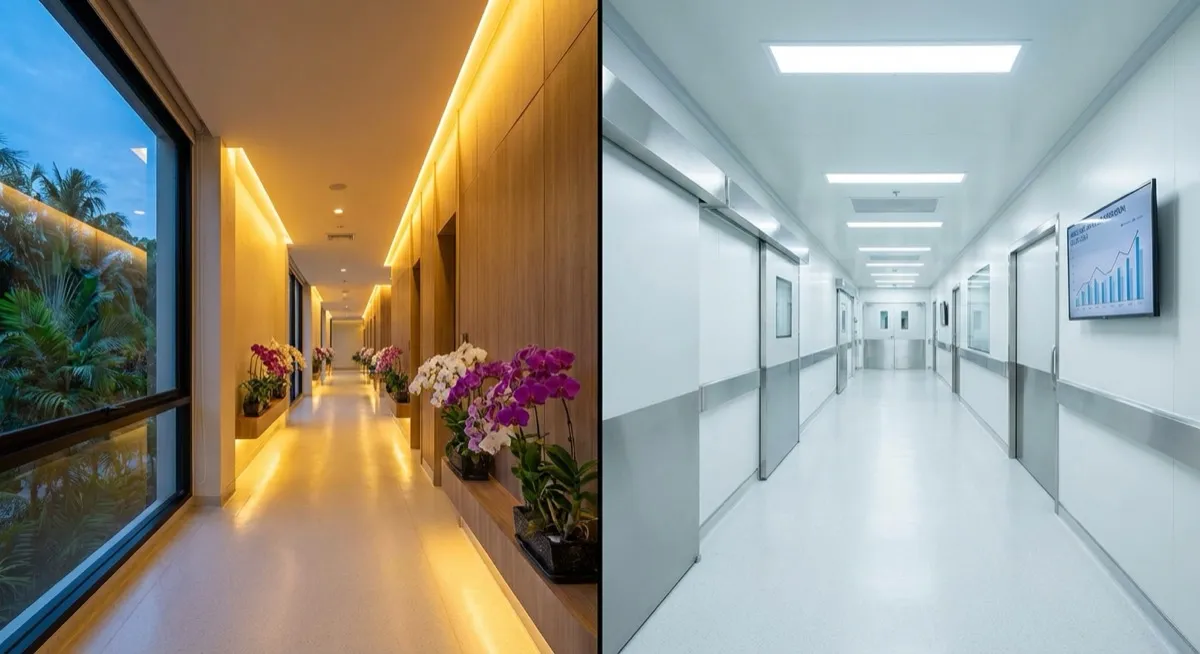
When it comes to affordable cosmetic surgery abroad, Thailand and Mexico are two of the most popular destinations in the world. Both countries attract hundreds of thousands of international patients each year with the promise of significant cost savings, qualified surgeons, and modern medical facilities. But while they share some similarities on the surface, Thailand and Mexico offer very different experiences in terms of hospital infrastructure, safety standards, surgeon training, and the overall patient journey. This guide provides a detailed comparison to help you decide which destination is the right fit for your cosmetic surgery goals.
Choosing between Thailand and Mexico for cosmetic surgery is not simply about finding the lowest price. It is about understanding the full picture, including accreditation, complication rates, recovery environments, communication, and the level of support available to international patients. Both countries have genuine strengths, and the best choice depends on your priorities, your procedure, and where you are traveling from.
Cost Comparison: Thailand vs Mexico
Both Thailand and Mexico offer dramatic savings compared to the United States, Canada, Europe, and Australia. In general, prices in Mexico and Thailand are broadly similar for the most popular cosmetic procedures, though there are some differences worth noting. Rhinoplasty costs $2,500 to $5,500 in Thailand and $2,500 to $5,000 in Mexico. Breast augmentation runs $3,000 to $5,500 in Thailand versus $3,000 to $5,000 in Mexico. Tummy tucks cost $4,000 to $7,000 in Thailand and $3,500 to $6,500 in Mexico. Facelifts range from $5,000 to $10,000 in Thailand compared to $4,500 to $9,000 in Mexico.
While the base surgical prices are comparable, Thailand often includes more in the quoted price. Thai hospital packages typically include the surgeon fee, anesthesia, operating room, one to three nights of hospital stay in a private room, post-operative medications, and follow-up appointments. Mexican clinics sometimes quote lower base prices but may charge separately for hospital stay, medications, or follow-up visits. It is important to compare total package prices rather than surgeon fees alone.
Accommodation and daily living costs are similar in both countries, with quality hotel rooms near hospitals available for $50 to $120 per night. Flights are where the comparison diverges significantly: for American patients, Mexico is substantially cheaper and faster to reach, while Thailand requires a longer and more expensive flight. For patients from Europe, Australia, or the Middle East, Thailand is often the more convenient option.
Hospital Standards and Accreditation
This is one of the areas where Thailand holds a clear advantage. Thailand has more than 66 JCI-accredited hospitals, making it one of the most densely accredited countries in the world for international healthcare standards. JCI accreditation is the gold standard in global hospital quality, evaluating everything from clinical protocols and infection control to patient rights and medication safety. Hospitals like Bumrungrad International, Bangkok Hospital, and Samitivej have been continuously accredited for over two decades.
Mexico has a growing number of JCI-accredited hospitals, with approximately 10 to 12 currently holding the designation. While these accredited Mexican facilities are excellent, the overall landscape is more varied. Many cosmetic surgery clinics in popular Mexican medical tourism destinations like Tijuana, Cancun, and Guadalajara are smaller private clinics rather than full-service hospitals, which means the level of emergency support, intensive care access, and nursing infrastructure can vary significantly from one facility to the next.
For patients who prioritize operating in a full-service, internationally accredited hospital environment with comprehensive emergency backup, Thailand offers a wider selection of proven facilities. For patients comfortable with smaller clinic settings and who do thorough research on their specific provider, Mexico also has reputable options, particularly in its JCI-accredited hospitals in major cities.
Surgeon Training and Qualifications
Both Thailand and Mexico produce well-trained surgeons, though the training pathways and regulatory environments differ. Thai plastic surgeons complete a minimum of six years of specialty training after medical school, and board certification by the Royal College of Surgeons of Thailand is a rigorous process. Many of Thailand's top cosmetic surgeons have completed additional fellowships at institutions in the United States, United Kingdom, Australia, or South Korea, bringing back specialized expertise in rhinoplasty, body contouring, and facial aesthetics.
Mexican plastic surgeons also undergo extensive training, with certification from the Mexican Council of Plastic, Aesthetic, and Reconstructive Surgery serving as the primary credential. The quality of training at Mexico's top medical schools and surgical residency programs is well-regarded internationally. However, the regulatory environment in Mexico has faced scrutiny, with reports of non-board-certified practitioners performing cosmetic procedures in some border-town clinics. This makes verifying credentials especially important for patients considering Mexico.
In both countries, the key is to verify that your surgeon is board-certified by the relevant national surgical board and operates at an accredited facility. Working with a reputable medical tourism facilitator can help ensure you are matched with a properly credentialed surgeon regardless of which country you choose.
Safety Record and Patient Outcomes
Thailand has built a strong safety reputation in medical tourism over several decades. The Thai government has actively supported the medical tourism industry with regulation, oversight, and investment in hospital infrastructure. Complication rates at Thailand's top JCI-accredited hospitals are comparable to those at leading Western institutions, and the robust hospital environment means that if complications do arise, the resources to manage them are immediately available.
Mexico's safety record for cosmetic surgery is more varied. The country's top accredited hospitals and board-certified surgeons deliver excellent outcomes, but the wider industry includes a significant number of unregulated providers, particularly in border cities that market aggressively to American patients seeking low prices. High-profile cases of complications at unaccredited Mexican clinics have received media attention in recent years, though it is important to note that these cases are not representative of the country's best providers.
For patients in both destinations, the best protection is choosing a board-certified surgeon operating at a JCI-accredited or nationally accredited hospital, confirming the facility has proper emergency and ICU capabilities, and working with a trusted facilitator who has personally vetted the provider. The safety gap between the two countries narrows considerably when patients follow these guidelines.
Recovery Experience
The recovery experience is one area where Thailand has a distinctive advantage that goes beyond medical metrics. Thailand is a world-class tourist destination with a fully developed hospitality infrastructure, offering patients a recovery environment that includes luxury hotels, tropical resorts, spa treatments, and some of the best food in the world. Patients recovering from cosmetic surgery in Thailand can transition from their hospital stay to a beachside resort in Phuket, a mountain retreat in Chiang Mai, or a five-star hotel in central Bangkok.
Mexico also offers attractive recovery options, particularly in resort destinations like Cancun, Puerto Vallarta, and Los Cabos. The proximity to the United States is a significant advantage for American patients, who can fly home in two to five hours if needed. This closeness provides peace of mind for patients who want to be within easy reach of home during their recovery period. The cultural familiarity and widespread availability of Western food and amenities in Mexican resort areas also appeal to many North American patients.
Both countries offer pleasant recovery environments, but the choice often comes down to personal preference: Thailand for an immersive, exotic recovery experience with world-class hospitality, or Mexico for proximity, familiarity, and easy access from the United States and Canada.
Communication and Language
English proficiency in medical settings is strong in both Thailand and Mexico. Thailand's major international hospitals employ dedicated English-speaking staff, and most surgeons at top Bangkok hospitals are fluent in English, having trained or completed fellowships in English-speaking countries. International patient departments at hospitals like Bumrungrad handle patients in over 30 languages.
In Mexico, English proficiency is generally high at the top clinics catering to American and Canadian patients, particularly in border cities and major medical tourism hubs. Many Mexican surgeons have trained in the United States or maintain professional relationships with American surgical societies. Communication is rarely a significant barrier at reputable Mexican clinics.
In both countries, working with a medical tourism concierge ensures seamless communication throughout the process. Misunderstandings about procedure details, post-operative instructions, or medication dosages can have serious consequences, so having a bilingual intermediary adds an important layer of safety and clarity.
The Verdict: Thailand vs Mexico for Cosmetic Surgery
Both Thailand and Mexico are legitimate options for cosmetic surgery abroad, and the right choice depends on your individual priorities. Thailand is the stronger choice for patients who prioritize operating at a JCI-accredited hospital, want a premium recovery experience, are traveling from Australia, Europe, or the Middle East, or are seeking procedures where Thai surgeons have particular expertise such as rhinoplasty and facial aesthetics. Thailand's deeper medical tourism infrastructure, wider selection of accredited hospitals, and legendary hospitality make it the gold standard for international patients seeking the complete package.
Mexico is a compelling choice for American and Canadian patients who prioritize proximity, want to minimize travel time and flight costs, and are comfortable with a more familiar cultural environment. For straightforward procedures at accredited Mexican hospitals, the results and safety record can be excellent. The key is thorough research and credential verification.
Regardless of which destination you choose, the most important decisions are selecting a board-certified surgeon and an accredited facility, not simply the destination itself. BeeLink specializes in connecting international patients with Thailand's top surgeons and hospitals, and we are always happy to provide a transparent comparison to help you make the right choice for your specific needs.