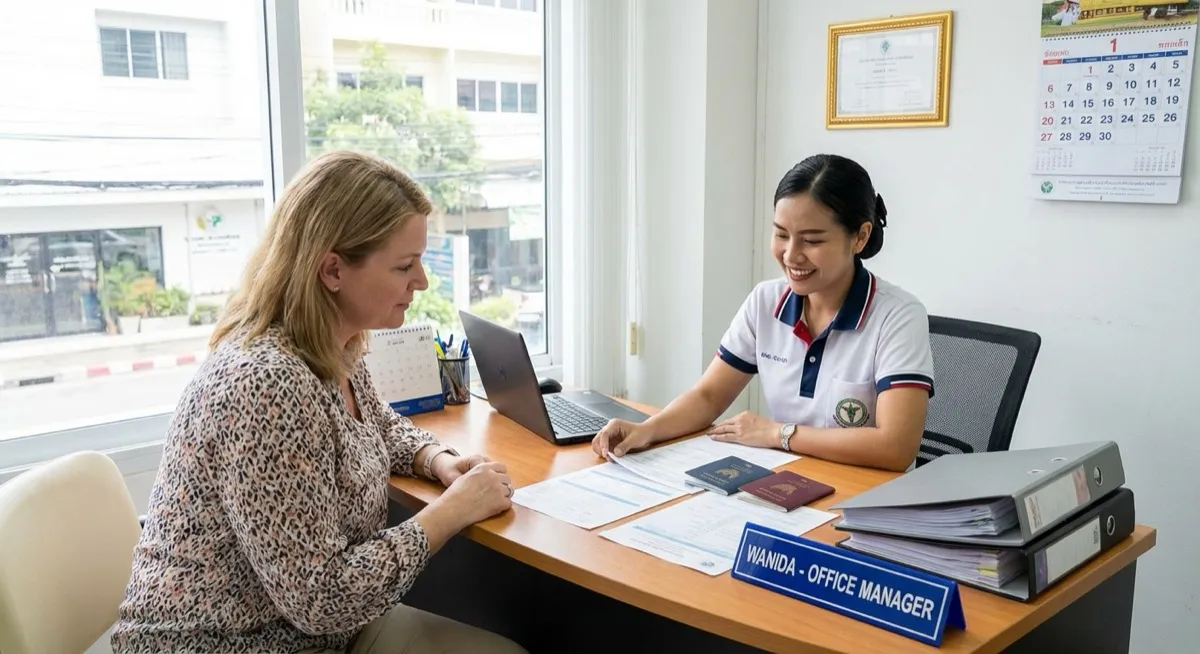
Understanding Thailand's visa requirements is an essential part of planning your medical trip, and the good news is that the process is straightforward for the vast majority of international patients. Thailand has one of the most welcoming entry policies in Asia, offering visa-free access or simple visa arrangements for citizens of most Western countries. Whether you need a few days for dental work or several weeks for surgical recovery, Thailand's immigration framework accommodates medical tourists with remarkable flexibility.
This guide covers the visa options available to international medical patients in 2026, including visa-free entry, the dedicated Medical Treatment Visa, extension possibilities, and important practical tips that will help you plan your stay with confidence.
Visa-Free Entry
Citizens of most Western countries can enter Thailand without a visa for stays of 30 to 90 days, depending on nationality. As of 2026, passport holders from the United States, United Kingdom, Australia, Canada, and most European Union countries are granted 90-day visa-free entry upon arrival in Thailand. This generous allowance is more than sufficient for the vast majority of medical tourism trips, which typically range from one to four weeks.
Visa-free entry is by far the simplest option for medical tourists. You simply arrive at Suvarnabhumi Airport with your passport, clear immigration, and receive a stamp permitting your stay. There is no application process, no documentation required beyond your passport and return flight details, and no fee. This makes Thailand one of the easiest medical tourism destinations in the world to visit from a bureaucratic standpoint.
It is important to ensure your passport has at least six months of validity remaining from your date of entry, as this is a standard requirement enforced by Thai immigration. You should also be prepared to show proof of accommodation and a return or onward flight ticket, though these are rarely requested in practice. Arriving with printed copies of your hotel booking and flight itinerary is a sensible precaution that takes minimal effort.
Medical Treatment Visa
For patients who require extended stays beyond the standard visa-free period, Thailand offers a dedicated Medical Treatment Visa that permits stays of up to 90 days with the possibility of extension. This visa is specifically designed for international patients traveling to Thailand for medical procedures and recovery, and it provides additional flexibility for complex treatments that require longer recovery periods or staged procedures.
The Medical Treatment Visa is obtained through a Thai embassy or consulate in your home country before you travel. The application requires a letter from your Thai hospital or clinic confirming your treatment plan, your passport, completed application forms, passport-sized photographs, and the visa fee. Processing times vary by embassy but are typically five to ten business days. Your hospital's international patient department or your concierge service can provide the documentation needed for the application.
This visa is particularly useful for patients undergoing procedures that require extended recovery with surgeon supervision, staged procedures that involve multiple surgical sessions over several weeks, or complex dental work like full-arch implant reconstructions that may require multiple clinic visits over an extended period. Having the security of a longer permitted stay means you can focus on your recovery without worrying about immigration timelines.
Extension Options
If your recovery takes longer than expected or you simply want to extend your stay in Thailand, several options are available. Patients on visa-free entry can visit a Thai immigration office to request a 30-day extension, which is granted at the discretion of the immigration officer and requires a fee of 1,900 Thai baht, approximately $55. This extension is typically straightforward and can be processed at immigration offices in Bangkok, Chiang Mai, Phuket, and other major cities.
Medical Treatment Visa holders can also apply for extensions at Thai immigration offices. Extensions are typically granted in 90-day increments and may require updated documentation from your medical provider confirming that continued treatment or recovery supervision is necessary. Your hospital can provide this documentation, and the process is generally smooth for patients with legitimate medical reasons for extending their stay.
For patients who need to leave Thailand and return for a follow-up procedure or second-stage treatment, re-entry is straightforward. You will receive a new visa-free entry stamp upon your return, starting a fresh permitted stay period. Some patients plan their treatment in two phases, returning to Thailand after an interval of several months for completion of staged procedures like dental implants.
Required Documents
Regardless of which visa pathway you use, having the right documents organized and accessible makes your entry into Thailand smooth and stress-free. At minimum, carry your valid passport with at least six months remaining, your return flight booking, hotel reservation confirmations, and contact information for your hospital or clinic. For Medical Treatment Visa applicants, you will also need your hospital's confirmation letter, completed visa application forms, and passport photographs.
It is strongly recommended to carry printed copies of all medical documentation, including your treatment plan, surgeon correspondence, pre-operative test results, and any relevant medical history. While immigration officers do not typically ask for medical documentation, having it readily available ensures you can answer any questions about the purpose of your visit quickly and clearly. Digital copies stored on your phone or in cloud storage serve as a backup.
Travel insurance documentation is another important item to have accessible. While not a formal requirement for entry, carrying proof of insurance that covers medical procedures abroad demonstrates that you are a prepared, responsible traveler. Some hospitals may also request proof of insurance or a financial guarantee before confirming your procedure.
Health Insurance Considerations
Standard travel insurance policies typically do not cover elective cosmetic or dental procedures. Before your trip, review your insurance policy carefully and consider purchasing specialized medical tourism insurance that explicitly covers your planned procedure, potential complications, and extended recovery. Several insurance providers now offer policies designed specifically for medical tourists, covering surgical complications, hospital readmission, and even trip cancellation related to medical reasons.
Thailand's hospitals are accustomed to working with international insurance providers and can provide the documentation needed for claims. Some hospitals also offer their own complication guarantee packages, which cover the cost of treating any surgical complications that arise within a specified period after your procedure. Ask your hospital or concierge service about these options during the planning stage.
Even if your procedure is not covered by insurance, having comprehensive travel insurance that covers non-elective medical emergencies, trip cancellation, lost luggage, and repatriation is essential for any international trip. Thailand's healthcare costs are affordable even without insurance, but having coverage provides peace of mind and financial protection against unexpected events.
Important Tips
Book your return flight with flexibility if possible. While most medical trips proceed exactly as planned, recovery timelines can sometimes vary, and having the ability to adjust your departure date by a few days without significant cost provides valuable peace of mind. Many airlines offer flexible fare options or affordable change fees for international flights to Asia.
Keep your surgeon's and hospital's contact information readily accessible, including physical addresses that you can show to a taxi driver in case of communication difficulties. Download the Grab ride-hailing app before you arrive, as it works throughout Thailand and eliminates the need to negotiate taxi fares. Having Google Maps available offline for Bangkok is also useful for navigating between your hotel, hospital, and nearby amenities.
Thailand is a remarkably safe and welcoming country for international visitors, and the medical tourism infrastructure is designed to make your experience as smooth as possible. However, as with any international trip, basic precautions apply. Register your trip with your home country's embassy, keep copies of important documents separate from the originals, and share your itinerary with a trusted friend or family member at home.
How BeeLink Handles Logistics
Visa requirements, entry documentation, and travel logistics can feel complicated when you are planning a medical trip abroad for the first time. BeeLink's concierge team takes care of these details so you do not have to navigate them alone. We advise you on the best visa option for your specific treatment timeline, help you compile the necessary documentation, and ensure you arrive in Thailand fully prepared for a smooth entry.
Our team coordinates your entire trip logistics, from recommending the optimal travel dates based on your surgical schedule to arranging airport transfers, accommodation near your hospital, and domestic flights if you plan to spend part of your recovery in Phuket or another Thai destination. We have handled hundreds of medical tourism trips and know exactly what paperwork, timing, and preparation are needed to make everything seamless.
Navigating a foreign country's immigration and healthcare systems should never be a source of stress during what is already a significant personal decision. With BeeLink managing the logistics, you can focus entirely on your treatment, your recovery, and enjoying one of the most beautiful countries in the world while you heal. Reach out for a free consultation and let us take the complexity out of planning your medical journey to Thailand.